
Alberta curriculum unit planning: a practical K–12 workflow you can use tomorrow
Alberta curriculum unit planning made practical: step-by-step from outcomes to units, assessment, and weekly lessons—without losing track of coverage.


In this article8 sections
If you teach in Alberta, Alberta curriculum unit planning has to start at the outcomes and finish with teachable weeks on your actual timetable. This guide gives you a simple workflow you can run with tomorrow—whether you teach Grade 2 science, Grade 6 social, or Grade 10 English. The steps work whether you plan on paper, in Google Docs, or in a dedicated planner.

What Alberta teachers need from a unit planning workflow
A usable workflow in Alberta must line up with how the curriculum is structured: Learning Outcomes supported by Knowledge, Understanding, and Skills & Procedures (often shown in New LearnAlberta alongside Organizing Ideas and Guiding Questions). If your plan keeps those pieces visible from the start, alignment and assessment become much easier. ([curriculum.learnalberta.ca](https://curriculum.learnalberta.ca/cdn/help/documents/teacher_guide_en.pdf?utm_source=openai))
Essentials your process should cover
- Start from outcomes, not activities. Activities change; outcomes don’t. Anchoring to outcomes keeps instruction coherent for students who move between classes or miss days.
- Show the evidence of learning early. Decide what acceptable evidence looks like so students know what they’re aiming for.
- Connect outcomes to the week you actually teach. Put lessons on real calendar days (including rotation days) so pacing is realistic and substitutes can follow your plan.
- Make coverage visible. Track what’s taught, assessed, and mastered so nothing is missed or over-taught across the term.
- Build in checks for understanding. Frequent, low-stakes assessment tells you when to move on and when to reteach.
- Plan for inclusion. Align supports and differentiation with the stated outcomes so accommodations are purposeful.
Alberta curriculum unit planning: map outcomes to a teachable unit
Use this 60–90 minute workflow at the start of each unit.
- Confirm which curriculum applies this year. On September 2026, new Grades 4–6 social studies is implemented across Alberta; K–3 social was implemented in September 2025, and Grades 7–9 drafts are in piloting/field testing on the province’s stated timeline. Check the Subject Areas page for your grade and subject before you start. Why it works: You avoid mixing old and new expectations. ([alberta.ca](https://www.alberta.ca/curriculum-subject-areas))
- Collect the right pieces from New LearnAlberta. Print or copy the unit’s Organizing Idea, Guiding Questions, Learning Outcomes, and the associated Knowledge, Understanding, and Skills & Procedures. Why it works: Planning with the exact curriculum language prevents drift and simplifies reporting. ([curriculum.learnalberta.ca](https://curriculum.learnalberta.ca/cdn/help/documents/teacher_guide_en.pdf?utm_source=openai))
- Write the unit’s transfer goal and 2–3 essential questions. In plain language, define what students should be able to do with the learning beyond a test. Draft essential questions that invite analysis and connect to the curriculum’s vision for student learning. Why it works: Backward design clarifies priorities and aligns with Alberta’s emphasis on knowledge, skills, and competencies for life and work. ([alberta.ca](https://www.alberta.ca/ministerial-order-on-student-learning?utm_source=openai))
- Decide evidence of learning before activities. Sketch a culminating task and 2–3 mid-unit performance checks that sample the listed Skills & Procedures and Understandings. For Grades 6 and 9, review the current PAT information and exemplars to calibrate expectations and vocabulary for students. Why it works: Clear success criteria focus daily teaching and help students self-assess against provincial standards. ([alberta.ca](https://www.alberta.ca/provincial-achievement-tests))
- Sequence outcomes and sketch a calendar. Group outcomes that naturally build on each other, then lay them on a simple week grid that matches your rotation days. Mark when you will introduce, practice, and assess each outcome, and where you’ll reteach. Why it works: Pacing is realistic when it lives on the same calendar your students use. If rotating schedules complicate things, see our practical tips in How to Plan Lessons on a Rotating Schedule (Without the Spreadsheet).
A quick example (Grade 6 social)
- Organizing Idea: Citizenship and identity in Canada.
- Learning Outcome: Analyze how federal and provincial responsibilities impact daily life.
- Skills & Procedures focus: Interpreting primary sources; constructing an argument.
- Culminating task: Evidence-based letter to an MLA on an assigned policy area.
- Calendar: 3 weeks—Week 1 (background and skills), Week 2 (case studies), Week 3 (draft, feedback, revise, publish).

Plan lessons, activities, and checks for understanding from the same map
- Thread lessons to outcomes. For each outcome, list 3–5 “lesson threads” (mini-sequences of teach–practice–check) and tag each thread to the exact Knowledge, Understanding, or Skills & Procedures it targets. Why it works: When every lesson is tied to a thread, you avoid one-off activities and can show precise coverage over time.
- Build daily checks for understanding. Use exit tickets, conferences, quick writes, or mini-performances that align to the day’s specific K/U/S&P target. Plan how you’ll act on results the next day. Why it works: Assessment for, as, and of learning—used formatively—drives timely feedback and adjustments. ([learnalberta.ca](https://www.learnalberta.ca/content/mewa/html/assessment/purposeofclassroomassessment.html?utm_source=openai))
- Bank practice that fits the outcomes. Gather short tasks and resources that rehearse exactly what the outcome requires (e.g., reading unfamiliar informational texts for ELAL, designing fair tests in science). Why it works: Focused practice shortens the path to mastery. If you use Classroom Radar, the features page shows how to attach activities directly to outcomes so you can see practice-to-assessment alignment at a glance.
- Plan supports and extensions up front. Note universal supports, targeted scaffolds, and individualized adaptations for each thread (for example, sentence stems for argument writing, manipulatives for fractions, or choice of medium). Why it works: A tiered approach keeps instruction accessible while maintaining common outcomes. ([learnalberta.ca](https://www.learnalberta.ca/content/ieptLibrary/lib08.html?utm_source=openai))
- Pre-write success criteria with students. Turn the outcome language into student-friendly “look-fors” and co-construct checklists or single-point rubrics. Why it works: Visible criteria increase equity by making quality transparent to every learner.
- Schedule feedback and reteach loops. Decide in advance where you’ll pause for feedback, run small-group clinics, or swap in a re-engage lesson if a check shows gaps. Why it works: You protect time to close learning gaps instead of hoping to “find time later.”
For a simple way to monitor what’s covered and what still needs teaching, see How to Track Curriculum Coverage Without a Spreadsheet.

Common pitfalls in Alberta curriculum planning (and how to avoid them)
- Planning around activities instead of outcomes. Fix it by starting every unit plan with exact Learning Outcomes and the associated K/U/S&P, then deriving activities from the desired evidence. Why it works: Backward design reduces busywork and increases transfer.
- Mixing old and new documents. With staged implementation (for example, K–3 social in 2025, Grades 4–6 social in 2026), verify your grade’s current documents on Alberta.ca before planning. Why it works: You avoid coverage gaps and misaligned assessments. ([alberta.ca](https://www.alberta.ca/curriculum-subject-areas))
- Overstuffed units. If you can’t teach and assess each targeted outcome well, you’re targeting too many. Cluster fewer outcomes and plan multiple practice opportunities.
- Vague assessment plans. “We’ll do a quiz at the end” isn’t enough. Draft the culminating task and interim performance checks while you’re choosing outcomes. Why it works: Students see a coherent progression from practice to product.
- Ignoring provincial exemplars in PAT years (6 and 9). Use the current bulletins and exemplars to tune prompts, time expectations, and language. Why it works: You build familiarity without “teaching to the test,” and your rubrics align to provincial standards. ([alberta.ca](https://www.alberta.ca/provincial-achievement-tests))
- No plan for reteaching. Insert decision points tied to checks for understanding so reteaching is part of the plan, not an afterthought.
How Classroom Radar supports unit planning and outcome tracking
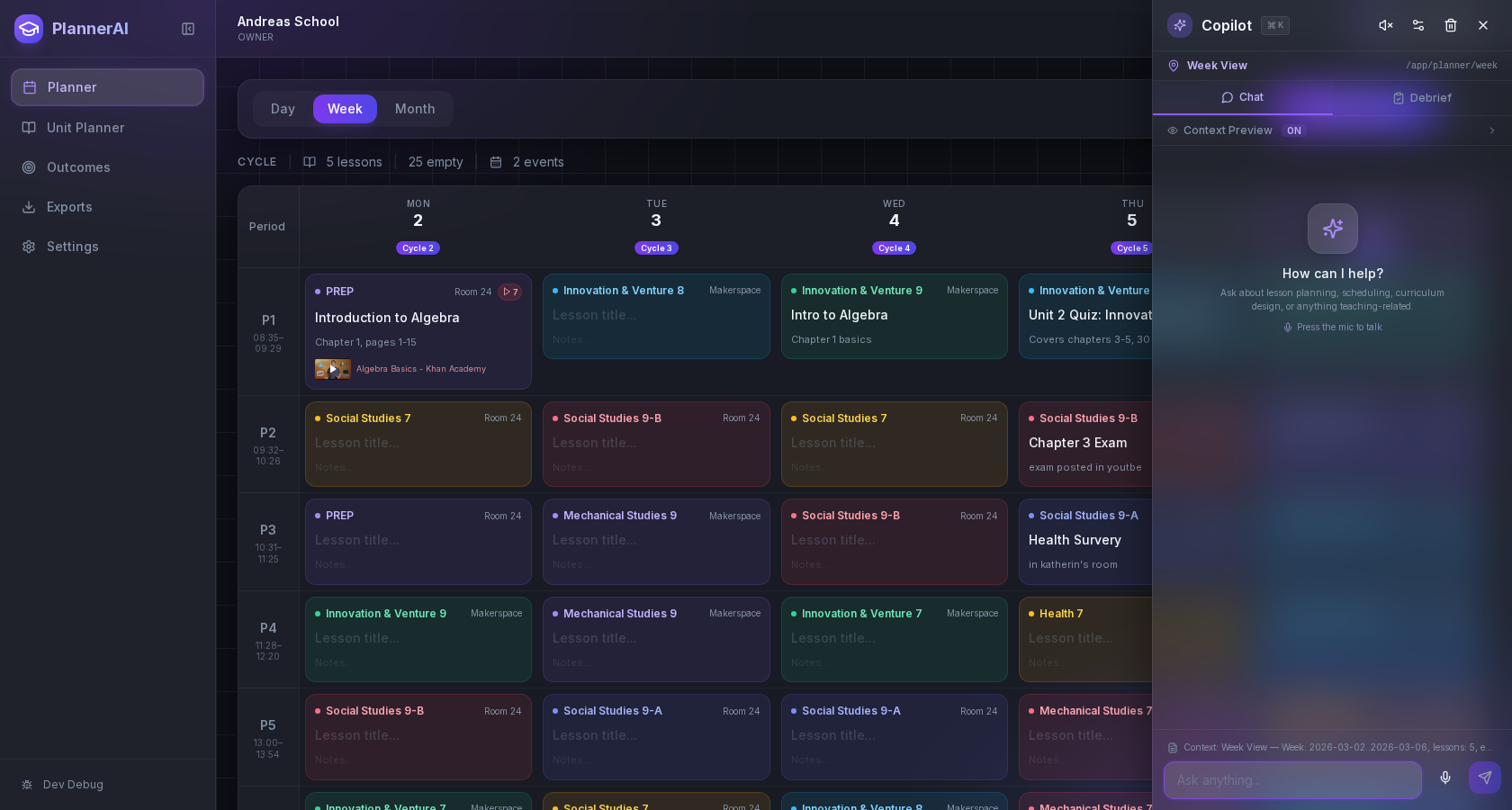
If you prefer a tool that mirrors this workflow, Classroom Radar connects your unit map to the timetable you actually teach.
- Map outcomes once, use them everywhere. Link Learning Outcomes (and your success criteria) to the unit and autopopulate them into each planned lesson. Why it works: Coverage is visible without a separate spreadsheet. See the overview on features.
- Plan on your real rotation. Add your A/B/C days or cycle; Radar places lessons on the actual dates so you can move a lesson forward without breaking the whole sequence. Why it works: Your calendar and curriculum finally live in one place. If you’re new to planning this way, our walkthrough for rotating timetables helps: How to Plan Lessons on a Rotating Schedule (Without the Spreadsheet).
- Keep checks and tasks tied to outcomes. Attach exit tickets, performance tasks, and exemplars to the exact outcome they assess; your coverage view updates automatically. Why it works: You can answer “Have we taught and assessed this outcome yet?” in two clicks.
- Capture ideas fast with voice. When a good prompt or task idea hits, record it and turn it into a lesson later with Radar’s voice planning. Why it works: You reduce context switching and keep planning momentum. Explore it at features.
- Build activities without leaving the plan. Use the activity builder when you need quick practice or a printable; attach it to the lesson and outcome so it’s easy for a teammate or substitute to run. Why it works: Materials live with the plan, not lost in folders. If you’re shopping for tools, see our lesson planner for teachers.
Whether you use Radar or not, the planning moves in this article will keep your units aligned and teachable.
Frequently asked questions
How do I know if I’m using the current Alberta curriculum in my unit plan?
Check the Subject Areas page on Alberta.ca for your grade and subject, which lists what’s implemented, piloted, or in field testing by year. In September 2026, for example, Grades 4–6 social studies is implemented across the province and K–3 social was implemented in 2025. Verifying this before you plan prevents mixing old and new documents. ([alberta.ca](https://www.alberta.ca/curriculum-subject-areas))
What’s the fastest way to map Alberta outcomes into a unit?
Pull the Organizing Idea, Guiding Questions, Learning Outcomes, and the Knowledge, Understanding, and Skills & Procedures from New LearnAlberta for your subject and grade. Then cluster a small set of outcomes that logically build toward one culminating task. Working directly from these components keeps your plan faithful to the Program of Studies. ([curriculum.learnalberta.ca](https://curriculum.learnalberta.ca/cdn/help/documents/teacher_guide_en.pdf?utm_source=openai))
How should unit assessment align with Alberta’s Provincial Achievement Tests (PATs)?
Use PAT subject bulletins, scoring guides, and exemplars to calibrate expectations, especially in Grades 6 and 9. Design mid-unit and culminating tasks that sample the same kinds of skills and texts without turning daily instruction into test prep. The PATs are administered annually in Grades 6 and 9 and complement classroom assessment. ([alberta.ca](https://www.alberta.ca/provincial-achievement-tests))
Do I need to write essential questions if the curriculum already has Guiding Questions?
Yes—short, course- or unit-level essential questions help focus learning and transfer, and they can sit alongside the curriculum’s Guiding Questions. Writing them to reflect Alberta’s vision for student learning helps connect day-to-day lessons to long-term outcomes for citizenship, work, and life. ([alberta.ca](https://www.alberta.ca/ministerial-order-on-student-learning?utm_source=openai))
What’s a simple way to track coverage across classes and rotation days?
Use a single coverage view that shows each outcome with three states: taught, practiced, assessed. Update it as you plan and as you teach. If you prefer software, Classroom Radar keeps this view synced with your timetable and lessons so you can spot gaps or double-coverage quickly.
Plan once, teach with confidence
When you plan units this way—verify the current curriculum, cluster outcomes, define evidence first, and thread lessons with daily checks—you make the Alberta Program of Studies teachable on real days for real students. Keep outcomes, evidence, and coverage visible, and both your pacing and your students’ learning will be clearer every week.
If you want a planner that mirrors this workflow and keeps outcomes, lessons, and your rotation in one place, try Classroom Radar—free to start—at /.
Sources and further reading
- Subject areas: K to 12 Curriculum Renewal Timeline (2022–2027) — Government of Alberta
- New LearnAlberta Teacher Guide (printing curriculum components) — Government of Alberta
- Ministerial Order on Student Learning (K–12 vision and outcomes) — Government of Alberta
- Provincial Achievement Tests (PATs): Overview, resources and exemplars — Government of Alberta
- The Guiding Framework for the Design and Development of K–12 Provincial Curriculum — Government of Alberta (Open Government)